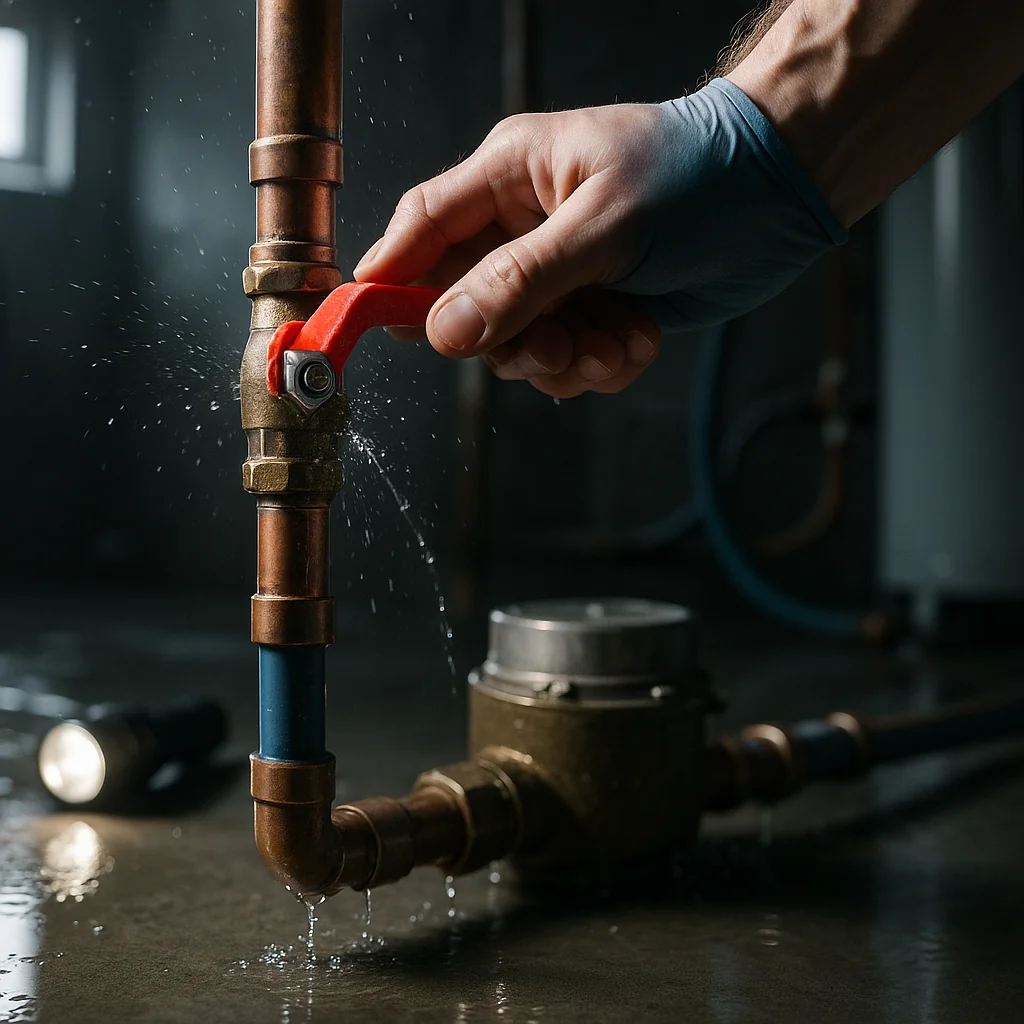
Know Your Shutoff Valves Before Disaster Strikes
When a pipe bursts or a fixture fails in your Noblesville home, every second counts. Knowing exactly how to shut off your water supply quickly can mean the difference between a minor inconvenience and thousands of dollars in water damage restoration costs. Whether you live near Downtown Noblesville or in a newer development on the outskirts of town, the steps to cutting off your water supply are the same — and every homeowner should know them by heart.
Why Speed Matters in a Water Emergency
Water damage escalates rapidly. A single burst pipe can release hundreds of gallons of water per hour, soaking into drywall, flooring, insulation, and structural materials within minutes. Mold can begin developing in as little as 24 to 48 hours after water exposure. The faster you stop the flow of water, the less damage your home sustains and the lower your restoration costs will be.
In Noblesville, Indiana, seasonal temperature swings — especially during harsh winters — make frozen and burst pipes a common emergency. Homes in neighborhoods like River Forest and Fox Run are no strangers to plumbing emergencies caused by freezing temperatures, aging infrastructure, or appliance failures. Being prepared ahead of time is your best defense.
Step 1: Locate Your Main Water Shutoff Valve
The single most important thing you can do before an emergency happens is to locate your main water shutoff valve. This valve controls all the water flowing into your home. When you find it and shut it off, water stops flowing to every faucet, toilet, appliance, and pipe in the house.
Where Is the Main Shutoff Valve Located?
- Basement or crawl space: In most Noblesville homes, the main shutoff valve is located in the basement near the front foundation wall, close to where the water line enters the house from the street.
- Utility room or mechanical room: In homes without basements, check near the water heater or furnace in a utility closet.
- Garage: Some homes have the shutoff valve mounted on an interior garage wall.
- Outside near the foundation: In warmer climates, the valve may be located outside, though this is less common in Indiana.
- Near the water meter: Your water meter is typically located near the street or sidewalk in a covered box. There is usually a shutoff valve here as well, though you may need a special tool to operate it.
Pro Tip: Once you find your main shutoff valve, label it clearly and make sure every adult in your household knows where it is. Consider attaching a tag or painting it a bright color so it is easy to spot in a stressful situation.
Step 2: Know the Two Types of Shutoff Valves
Not all shutoff valves operate the same way. Understanding the type of valve you have will help you act faster during an emergency.
Ball Valve
A ball valve has a lever handle. When the lever is parallel to the pipe, water flows freely. To shut off the water, turn the lever 90 degrees so it is perpendicular to the pipe. This takes only a second and is the most reliable type of valve for emergencies.
Gate Valve
A gate valve has a round, wheel-like handle. To shut off the water, turn the handle clockwise — remember the phrase “righty tighty, lefty loosey.” Gate valves may require several full rotations to fully close and can sometimes be stiff if they have not been used in a long time. It is a good idea to exercise this valve occasionally by opening and closing it to keep it in working order.
Step 3: Use Individual Fixture Shutoff Valves
If the emergency is isolated to a single fixture — such as a leaking toilet, a broken faucet, or a failed washing machine hose — you do not necessarily need to shut off water to the entire house. Most individual fixtures have their own dedicated shutoff valves.
- Toilet: Look for a small oval or football-shaped valve on the wall behind or beside the toilet base. Turn it clockwise to stop water flow.
- Sink: Check under the sink cabinet for hot and cold supply line valves. Turn both clockwise to shut off water to the faucet.
- Washing machine: Look for two valves — one for hot and one for cold — on the wall behind the machine. Turn both clockwise.
- Water heater: There is typically a cold water supply valve on top of or near the water heater. Turn it clockwise to isolate the unit.
- Refrigerator ice maker: Look for a small saddle valve or inline valve on the supply line, usually located under the sink or behind the refrigerator.
Step 4: Shut Off the Water at the Meter
If your main interior shutoff valve is broken, inaccessible, or fails to stop the water, your next option is the water meter shutoff located near the street. In Noblesville, water meters are typically housed in a small underground box near the curb or sidewalk in front of your property.
To shut off water at the meter, you will need a meter key or a long-handled tool called a curb stop key. This tool is inexpensive and available at most hardware stores. Keep one stored in your garage or utility room so it is accessible during an emergency. Insert the key into the meter box and turn the valve clockwise to shut off the water supply to your home.
Note: In some municipalities, homeowners are discouraged from operating the meter valve themselves. Contact the City of Noblesville Utilities if you are unsure about local regulations.
Step 5: Open Faucets to Relieve Pressure
After shutting off the main water supply, open the lowest faucet in your home — typically a basement utility sink or an outdoor hose bib — to allow residual water to drain out of the pipes. This relieves pressure in the system and helps stop water from continuing to flow from the damaged area.
What to Do After Stopping the Water
Once the water is off, your immediate concern shifts to minimizing damage and beginning the cleanup process. Here is what to do next:
- Document all visible damage with photos and video for your insurance claim.
- Remove standing water as quickly as possible using mops, wet-dry vacuums, or towels.
- Move furniture, electronics, and valuables out of the affected area.
- Open windows and run fans to begin drying the space if it is safe to do so.
- Call a licensed water damage restoration company immediately.
If your basement has flooded, the situation requires professional attention. Emergency flooded basement cleanup involves much more than removing visible water — it requires moisture mapping, structural drying, and mold prevention protocols that only trained technicians can properly perform.
Similarly, if water has pooled significantly in any area of your home, professional standing water removal services use industrial-grade extractors that remove far more water far more quickly than consumer equipment. The faster water is extracted, the lower the risk of mold growth and structural damage.
Create a Home Water Emergency Plan
Preparation is the most powerful tool you have against water damage. Consider taking the following steps today so your household is ready if an emergency occurs:
- Walk through your home and locate every shutoff valve — main valve, fixture valves, and appliance valves.
- Label all valves with waterproof tags or paint so they are easy to identify under stress.
- Purchase a meter key and store it in an accessible location.
- Test your shutoff valves annually to make sure they open and close properly.
- Share the plan with all household members, including older children, so everyone knows what to do.
- Keep the number of a trusted restoration company saved in your phone. For Noblesville residents, Water Damage Restoration Noblesville Pros is available 24/7 at (866) 725-0333.
Common Water Emergencies in Noblesville Homes
| Emergency Type | Recommended Shutoff | Urgency Level |
|---|---|---|
| Burst pipe | Main shutoff valve immediately | Critical |
| Overflowing toilet | Toilet fixture valve | High |
| Leaking washing machine | Appliance supply valves | High |
| Dripping faucet | Under-sink fixture valve | Moderate |
| Water heater leak | Cold supply valve on unit | High |
| Flooded basement | Main shutoff + call professionals | Critical |
When to Call a Professional Immediately
Some water emergencies go beyond what a homeowner can handle alone. Call Water Damage Restoration Noblesville Pros at (866) 725-0333 right away if:
- You cannot locate or operate your shutoff valve.
- Water is rising faster than you can control it.
- The water source is sewage or contaminated water.
- Electrical systems may have been exposed to water.
- Significant structural damage is visible.
- The affected area is larger than a small room.
Our team serves all of Noblesville including neighborhoods throughout the city and surrounding communities. We respond quickly to minimize damage and get your home back to normal as fast as possible.
Final Thoughts on Water Emergency Preparedness
Knowing how to shut off your water supply quickly is one of the most valuable skills a homeowner can have. In the chaos of a plumbing emergency, having a clear plan and knowing exactly where your shutoff valves are located can save your home from catastrophic damage. Take fifteen minutes this week to locate every valve in your home, test them, and make sure your family is informed. That small investment of time could save you tens of thousands of dollars in water damage repair costs down the road.
Leave a Reply