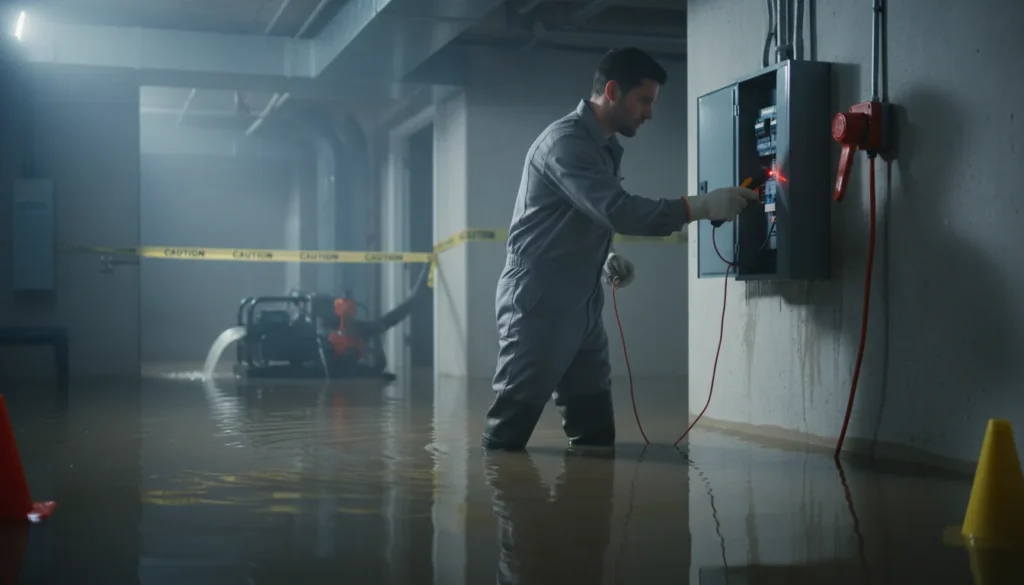
Why Turning Off Electricity After Flooding Is a Life-or-Death Priority
When floodwaters enter your Noblesville home, one of the most critical steps you must take before anything else is safely turning off the electricity. Water and electricity are a deadly combination, and acting quickly — but cautiously — can mean the difference between life and death. Whether you are dealing with a basement flood, a burst pipe, or storm surge from a severe Indiana weather event, understanding how to shut off your electrical system is an essential skill every homeowner should have. This guide from Water Damage Restoration Noblesville Pros walks you through every step of the process so you can protect yourself, your family, and your property.
Understanding the Dangers of Electricity and Floodwater
Floodwater is not just water — it is often a conductive mixture of minerals, chemicals, sewage, and debris that dramatically increases the risk of electrocution. Even a small amount of standing water can carry a lethal electrical current if live wires or energized appliances are submerged or nearby. In Noblesville and the surrounding Hamilton County area, heavy rainstorms and seasonal flooding events frequently catch homeowners off guard, making electrical hazards one of the leading causes of flood-related injuries.
Before you wade into a flooded room, consider the following dangers:
- Submerged outlets and appliances can energize the water around them instantly.
- Damaged wiring hidden behind walls may be exposed and live.
- Downed power lines outside your home can energize the ground and even your home’s plumbing system.
- Wet electrical panels can arc or spark when touched improperly.
If you are dealing with basement flood damage repair needs, electrical safety must come first before any cleanup or restoration work begins.
Step-by-Step Guide to Safely Turning Off Electricity After Flooding
Step 1: Assess the Situation From a Safe Distance
Before you touch anything, take a moment to assess your surroundings. Look for visible signs of electrical hazards such as sparking outlets, flickering lights, a burning smell, or buzzing sounds. If any of these are present, do not enter the flooded area. Call your utility provider — Indiana Michigan Power or Duke Energy, depending on your Noblesville location — and ask them to cut power to your home from the outside grid before you proceed.
Step 2: Do Not Enter Standing Water to Reach Your Panel
This is perhaps the most critical rule: never walk through standing water to reach your electrical panel. If your breaker box is located in a flooded basement or a room with standing water, assume the water is electrified. Contact a licensed electrician or your utility company immediately. Attempting to reach a submerged or water-adjacent panel is one of the most common causes of electrocution during flood events.
If your home regularly experiences basement flooding, it may be worth having your electrical panel relocated to a higher position in your home. This is a proactive upgrade that many Noblesville homeowners are choosing after dealing with repeated seasonal flood damage cleanup situations.
Step 3: Use a Dry Wooden Stick or Non-Conductive Tool if Necessary
If you absolutely must interact with an electrical component and the area appears dry but damp, use a dry wooden stick or a non-conductive tool to flip breakers. Never use metal tools. However, the safest course of action is always to call a professional rather than attempt this yourself.
Step 4: Turn Off Individual Breakers First Then the Main Breaker
If your electrical panel is in a safe, dry location and you can access it without crossing standing water, follow these steps:
- Put on rubber-soled shoes and dry rubber gloves before approaching the panel.
- Stand to the side of the panel — not directly in front — when opening the door.
- Begin by switching off individual circuit breakers one at a time starting from the bottom of the panel and working upward.
- Once all individual breakers are off switch the main breaker to the OFF position.
- Do not turn the power back on until a licensed electrician has inspected your wiring and panel.
Step 5: Contact Your Utility Provider to Disconnect at the Meter
Even after shutting off your main breaker the utility lines running into your home are still live. Contact your utility provider and request a disconnect at the meter. This is a free service that utility companies in the Noblesville area provide during emergency situations. This step ensures that no electricity is entering your home at all during the restoration process.
When to Call a Professional Electrician Immediately
There are several situations where you should skip the DIY approach entirely and call a licensed electrician or your utility company right away:
- Your electrical panel is located in a flooded or partially flooded area.
- You can smell burning or see scorch marks near outlets or the panel.
- You hear buzzing or crackling sounds from walls or ceilings.
- A downed power line is near or touching your home.
- You are unsure of any step in the process.
Remember: electricity cannot be seen in water. Do not assume standing water is safe just because it looks calm. In scenarios involving basement sewage backup cleanup the water may also contain dangerous pathogens making it doubly hazardous to enter without proper protection and confirmed electrical safety.
Special Considerations for Noblesville Homeowners
Noblesville sits in an area of Indiana that is particularly susceptible to flash flooding especially in low-lying neighborhoods near White River and its tributaries. Older homes in the area — particularly those built before the 1980s — may have outdated electrical systems including aluminum wiring or older panels that are more vulnerable to water damage and more dangerous when wet.
Homeowners in communities like Arcadia and other nearby areas served by Water Damage Restoration Noblesville Pros should take time before flood season to locate their electrical panel identify whether it is in a flood-prone area and speak with a licensed electrician about flood-proofing options.
Flood-Proofing Your Electrical System: Proactive Tips
- Elevate your electrical panel at least 12 inches above the base flood elevation for your area.
- Install ground fault circuit interrupters (GFCIs) in all areas near water including bathrooms kitchens and basements.
- Use waterproof outlet covers in basement and garage areas.
- Have your wiring inspected annually if you live in a flood-prone neighborhood.
- Label your breaker box clearly so you can quickly identify and shut off circuits in an emergency.
What to Do After the Power Is Off
Once you have safely de-energized your home the restoration process can begin — but only after the electrical system has been inspected and cleared by a licensed electrician. Here is what to prioritize:
- Document all damage with photos and video for your insurance claim before touching anything.
- Remove standing water as quickly as possible using a wet-dry vacuum or sump pump.
- Increase ventilation by opening windows and doors if outdoor conditions are safe.
- Contact a water damage restoration company to begin professional drying and remediation.
- Monitor for mold growth which can begin within 24 to 48 hours of a flooding event.
Mold is one of the most serious secondary consequences of flooding. If your basement or lower levels were affected it is critical to address moisture quickly. Learn more about the risks and solutions for basement mold after flooding to understand what you may be facing and how professionals can help.
Electrical Safety Checklist After a Flood
| Task | Safe to DIY? | Notes |
|---|---|---|
| Assess flooding level near panel | Yes | Do from a distance — do not enter water |
| Shut off individual breakers | Yes (if panel is dry and accessible) | Wear rubber gloves and dry shoes |
| Shut off main breaker | Yes (if panel is dry and accessible) | Stand to the side of the panel |
| Request meter disconnect | Yes (call utility provider) | Free emergency service in most cases |
| Inspect wiring after flooding | No | Licensed electrician required |
| Restore power after flooding | No | Must be cleared by licensed electrician |
Common Mistakes to Avoid
Even well-intentioned homeowners make dangerous mistakes during flooding emergencies. Here are the most common errors to avoid:
- Assuming the power is already off because the lights went out. A power outage does not mean your home is de-energized — your panel may still be live.
- Using extension cords or generators improperly during or after flooding which can introduce new electrical hazards.
- Turning power back on too soon before wiring has been inspected and dried. This is one of the leading causes of post-flood house fires.
- Neglecting HVAC systems which contain electrical components and may need separate inspection.
- Ignoring the smell of burning after floodwaters recede which may indicate smoldering wiring inside walls.
How Water Damage Restoration Noblesville Pros Can Help
At Water Damage Restoration Noblesville Pros we understand that flooding is one of the most stressful events a homeowner can face. Our team works alongside licensed electricians and other professionals to ensure your home is safe before restoration work begins. From water extraction and structural drying to mold remediation and full damage repair we are equipped to handle every phase of the recovery process.
If you have experienced flooding in your Noblesville home call us at (866) 725-0333 for immediate assistance. We are available around the clock to respond to water damage emergencies across Noblesville and the surrounding Hamilton County communities.
Leave a Reply