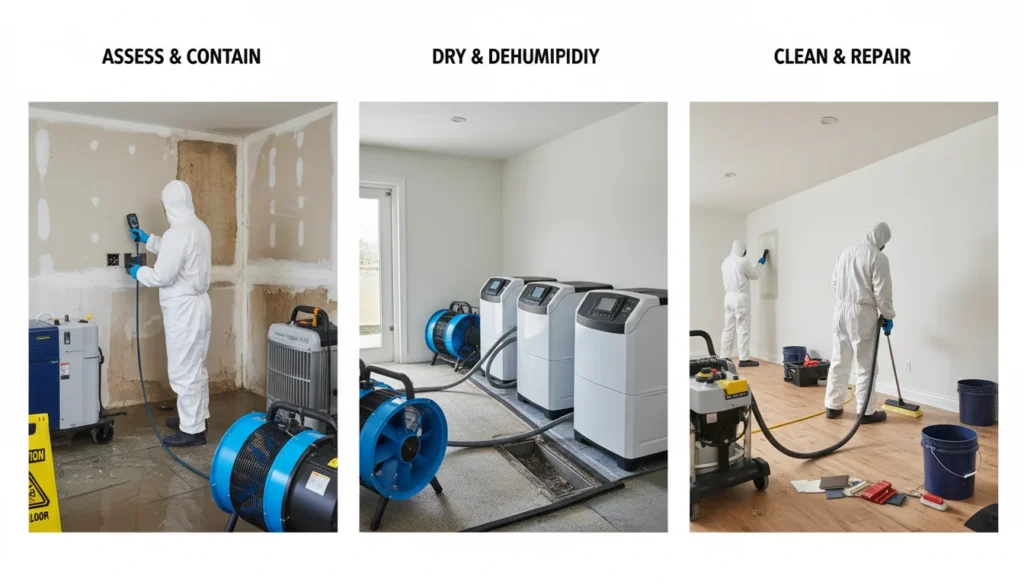
What Happens During the Water Damage Restoration Process?
When water invades your home or business in Noblesville, Indiana, the clock starts ticking immediately. Whether it is a burst pipe in the middle of winter, a flooded basement after a heavy storm, or an appliance malfunction, understanding how the water damage restoration process works can help you make faster decisions and reduce the overall damage to your property. Water Damage Restoration Noblesville Pros follows a structured, industry-proven approach that moves from emergency response all the way through to full structural restoration — giving homeowners and business owners the best possible outcome after a water loss event.
Step 1: Emergency Contact and Initial Assessment
The restoration process begins the moment you call for help. When you contact Water Damage Restoration Noblesville Pros at (866) 725-0333, a trained restoration specialist will ask you a series of questions to assess the situation remotely. These questions help determine the scope of damage, the likely source of water, and what equipment and crew will be needed on-site.
Once the team arrives, a thorough on-site inspection is conducted. Technicians evaluate the affected areas, identify the source of water intrusion, and classify the damage according to industry standards. This classification system — which ranges from Class 1 (minimal damage) to Class 4 (specialty drying situations) — directly influences the restoration strategy and timeline.
During this phase, technicians also categorize the water itself. Category 1 refers to clean water from a supply line. Category 2 involves gray water that may contain contaminants. Category 3 — known as black water — includes sewage or floodwater and requires the most intensive safety protocols. Knowing the water category is essential for protecting your family and guiding the cleanup approach.
Step 2: Water Extraction
Once the assessment is complete, the next priority is removing standing water as quickly as possible. Every hour that water sits in your home increases the risk of structural damage, mold growth, and permanent material loss. Restoration crews use powerful truck-mounted and portable extraction units capable of removing hundreds of gallons of water in a short period of time.
Furniture, rugs, and personal belongings are moved or elevated to prevent further saturation. In cases involving flooded lower levels, our team provides basement water damage restoration services that include targeted extraction techniques designed specifically for below-grade spaces where water tends to pool and linger longest.
Submersible pumps are used for deep standing water, while wet/dry vacuums and extraction wands handle the remaining moisture from carpets, hardwood floors, and other porous surfaces. This step is critical — the more water removed during extraction, the less work required during the drying phase.
Step 3: Moisture Detection and Mapping
One of the most important — and often overlooked — steps in the restoration process is comprehensive moisture detection. Water does not stay where you can see it. It migrates into wall cavities, under flooring, behind baseboards, and into insulation. Without proper detection, hidden moisture becomes a breeding ground for mold within 24 to 48 hours.
Restoration professionals use advanced tools including thermal imaging cameras, pin-type moisture meters, and non-invasive sensors to map the full extent of water migration throughout the structure. This process is what separates a thorough restoration from a surface-level fix. Our dedicated moisture detection services ensure that no hidden pockets of water are left behind — protecting your home from long-term structural and health-related consequences.
Once moisture mapping is complete, technicians create a drying plan tailored to the specific layout and materials of your property. This plan dictates where drying equipment is placed and how frequently readings are taken throughout the drying process.
Step 4: Drying and Dehumidification
With extraction complete and moisture mapped, the drying phase begins. Industrial-grade air movers and dehumidifiers are strategically placed throughout the affected areas to accelerate evaporation and pull moisture from the air. Unlike consumer-grade fans and dehumidifiers, professional equipment operates at a significantly higher capacity and is designed for continuous use in saturated environments.
This phase typically takes anywhere from three to five days, though the exact timeline depends on the severity of the damage, the types of materials affected, and the ambient conditions inside the structure. Technicians return daily to monitor moisture levels and adjust equipment placement as needed. Readings are documented throughout the process to ensure drying goals are being met and to provide a clear record for insurance purposes.
In some situations, drying requires more invasive techniques. Walls may need to be drilled to allow airflow into cavities, or flooring may need to be lifted to dry the subfloor beneath. These decisions are made carefully and only when necessary to achieve complete structural drying.
Step 5: Cleaning, Sanitizing, and Odor Removal
After the structure is dried, attention turns to cleaning and sanitization. Water damage — especially from Category 2 or Category 3 sources — introduces bacteria, mold spores, and other contaminants into the affected areas. Professional-grade antimicrobial and antifungal treatments are applied to all affected surfaces to eliminate microbial threats and prevent mold colonization.
Comprehensive water damage cleanup also includes the removal of damaged materials that cannot be salvaged. Saturated drywall, compromised insulation, and warped flooring are removed and disposed of properly. This step is essential for both safety and the success of the final restoration phase.
Odor removal is another critical component of this stage. Water damage often leaves behind musty or sewage-related odors that penetrate porous materials. Restoration professionals use air scrubbers, hydroxyl generators, and thermal fogging to neutralize odors at the molecular level — not just mask them.
Step 6: Restoration and Repairs
The final phase of the water damage restoration process is rebuilding and restoring your property to its pre-loss condition. Depending on the extent of the damage, this can range from minor repairs — such as replacing drywall, repainting, and installing new carpet — to major reconstruction involving structural components, cabinetry, and flooring systems.
Water Damage Restoration Noblesville Pros coordinates all aspects of the restoration phase to minimize disruption and ensure consistent quality throughout the project. Our goal is not just to fix what was damaged but to return your property to a condition that feels like the damage never happened.
Seasonal and Storm-Related Water Damage in Noblesville
Noblesville and the surrounding Hamilton County region experience a wide range of weather conditions throughout the year — from spring flooding to winter pipe bursts. Seasonal events can overwhelm drainage systems and cause significant property damage in a very short time. Our seasonal flood damage cleanup services are available year-round to address these recurring challenges specific to central Indiana properties.
Homeowners in nearby communities also benefit from our regional expertise. For example, residents in Tipton and surrounding areas can rely on the same rapid-response restoration services that Noblesville homeowners trust. Our team understands the local soil conditions, building styles, and drainage patterns that influence how water behaves in this region — and we apply that knowledge to every job we take on.
Why a Structured Process Matters
It may be tempting to handle water damage on your own — renting fans, pulling up wet carpet, and hoping things dry out. However, without professional-grade equipment and systematic moisture tracking, hidden water almost always leads to mold growth and structural deterioration weeks or months later. These secondary problems are often far more expensive to address than the original water damage.
A structured restoration process backed by certified professionals ensures that every phase of recovery is handled correctly the first time. It also provides the documentation needed to support insurance claims — including moisture readings, drying logs, and photographic evidence collected at every stage of the process.
- Faster drying times reduce the risk of mold and secondary damage
- Professional moisture mapping catches hidden water that visual inspection misses
- Certified technicians follow IICRC standards for safe and effective restoration
- Detailed documentation supports insurance claims and dispute resolution
- End-to-end service eliminates the need to coordinate multiple contractors
What to Do While You Wait for Help
While waiting for the restoration team to arrive, there are several steps you can safely take to minimize further damage:
- Shut off the water source if it is safe to do so
- Turn off electricity in affected areas if there is any risk of contact with water
- Move valuables, documents, and electronics to a dry area
- Do not use household fans or HVAC systems to dry the space — this can spread contaminants
- Avoid walking through heavily saturated areas to prevent slipping or cross-contamination
- Take photos or video of the damage for insurance documentation
These simple steps can make a meaningful difference in the outcome of your restoration while keeping you and your family safe until professional help arrives.
Choosing the Right Water Damage Restoration Company in Noblesville
Not all restoration companies are created equal. When selecting a provider, look for IICRC certification, local experience, 24/7 availability, and transparent communication throughout the process. Water Damage Restoration Noblesville Pros brings all of these qualities to every project — backed by a team that genuinely understands what Noblesville homeowners and business owners need when disaster strikes.
If your property has been affected by water damage, do not wait. Call us at (866) 725-0333 to speak with a restoration specialist and get the process started right away. The sooner professional help arrives, the better the outcome for your home and your peace of mind.
Leave a Reply