The Quick Answer: It Depends on the Situation
If you’ve just experienced water damage in your Noblesville home, your first instinct might be to grab every fan in the house and start drying things out. While fans can be helpful in certain scenarios, using them incorrectly can actually make the damage worse — spreading moisture, encouraging mold growth, and complicating the restoration process. Understanding when to use a fan after water damage and when to call in professionals is critical to protecting your home and your health.
Why Homeowners Reach for Fans First
It makes intuitive sense. Water is wet, air is dry, fans move air — so fans must dry water damage, right? This logic holds up in some cases, but water damage restoration is far more nuanced than simply blowing air around a wet room. The source of the water, the extent of the damage, the materials affected, and the current humidity levels all play a role in determining whether a fan will help or hurt the situation.
In Noblesville, Indiana, where summers are humid and spring storms can bring significant flooding, understanding the right drying strategy is especially important. Humidity levels in central Indiana can easily exceed 70% during warmer months, which means simply moving ambient air around a wet room may introduce more moisture rather than remove it.
When Using a Fan After Water Damage Is Acceptable
There are specific circumstances where using a household fan after water damage is a reasonable first step while you wait for professional help to arrive:
- Small, contained spills: If a pipe dripped onto a small section of hardwood floor or a washing machine overflowed slightly onto a tile surface, a fan can help begin the drying process on non-porous materials.
- Clean water source: Water from a broken supply line or a leaking faucet is considered Category 1 (clean water). In these cases, surface drying with a fan poses less risk than with contaminated water.
- Low indoor humidity: If your home’s indoor humidity is below 50% and the outdoor air is dry, circulating air with a fan can genuinely accelerate surface evaporation.
- Ventilating a small area: Opening windows and using fans to cross-ventilate a bathroom or laundry room after a minor leak can reduce moisture buildup temporarily.
Even in these situations, fans are only a stopgap measure. Professional water damage cleanup services use industrial-grade equipment that goes far beyond what a household fan can accomplish.
When You Should NOT Use a Fan After Water Damage
This is where things get critical. There are several situations where using a fan after water damage can cause serious harm to your property and your family’s health:
1. Contaminated or Sewage Water
If the water damage involves sewage backup, floodwater from outside, or water from a toilet overflow, you are dealing with Category 2 or Category 3 water — also known as gray or black water. These water sources contain bacteria, viruses, and other dangerous pathogens. Running a fan in these conditions can aerosolize contaminants and spread them throughout your home, creating a serious health hazard.
2. Mold Is Already Present
If you can see or smell mold, fans will spread mold spores to unaffected areas of your home. Mold can begin growing within 24 to 48 hours of water damage, which means even a day-old leak could already have mold colonies forming inside your walls or under your flooring. Blowing air across mold is one of the worst things you can do in this scenario.
3. Structural Materials Are Saturated
Drywall, insulation, subfloor, and wall cavities absorb and retain water in ways that a surface fan simply cannot address. In fact, blowing air across wet drywall while moisture remains trapped inside the wall cavity can cause the surface to appear dry while the interior continues to harbor moisture and mold. This is a common and costly mistake homeowners in areas like River Forest make after basement or crawlspace flooding events.
4. Electrical Hazards Are Present
If water damage has reached electrical outlets, panels, or wiring, plugging in a fan is dangerous and potentially life-threatening. Always ensure your electrical system is safe before using any powered equipment in a water-damaged area.
5. High Outdoor Humidity
During Noblesville’s warm, humid summers, opening windows and running fans can actually pull humid outdoor air into your home, adding to the moisture problem rather than reducing it. Always check the outdoor humidity level before attempting to ventilate a water-damaged space.
What Professionals Use Instead of Regular Fans
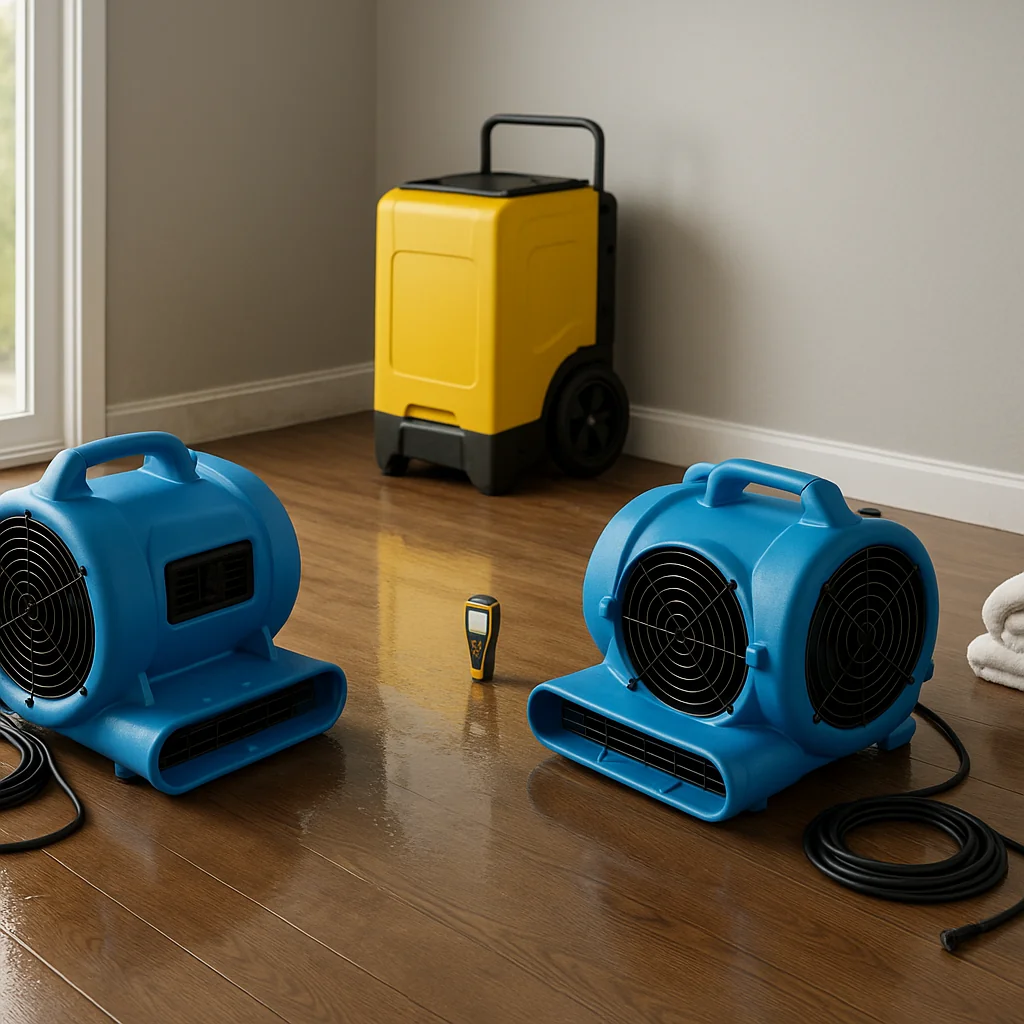
Professional water damage restoration companies use a combination of specialized equipment that works far more effectively than household fans:
| Equipment | Purpose | Advantage Over Regular Fans |
|---|---|---|
| Air Movers | High-velocity airflow across surfaces | Move 10-20x more air than household fans |
| Dehumidifiers | Extract moisture from the air | Actively remove humidity rather than just circulate it |
| Moisture Meters | Measure moisture inside walls and floors | Identify hidden moisture fans cannot address |
| Thermal Imaging Cameras | Detect moisture behind surfaces | Find damage invisible to the naked eye |
| Air Scrubbers | Filter contaminants and mold spores | Improve air quality during drying process |
This combination of tools is why professional restoration achieves complete drying in a fraction of the time it would take with household fans — and without the risk of hidden moisture leading to mold growth weeks later.
The Hidden Danger: Mold Growth After Improper Drying
One of the most significant risks of relying on fans alone after water damage is the development of mold. Mold thrives in environments with moisture levels above 60% relative humidity and temperatures between 60°F and 80°F — conditions that are common in Noblesville homes during spring and summer. When a fan dries only the surface of a material while moisture remains trapped inside, it creates the perfect environment for mold to grow undetected.
Homeowners in neighborhoods like Stony Creek who have experienced flooding from nearby waterways know all too well how quickly mold can take hold if water damage is not addressed completely and professionally. Mold remediation is significantly more expensive and disruptive than proper initial water damage restoration, making it all the more important to get the drying process right from the start.
Step-by-Step: What to Do Right After Water Damage
Instead of immediately reaching for the fan, follow these steps to protect your home and set the stage for effective restoration:
- Step 1 — Ensure safety: Turn off electricity to the affected area if there is any risk of electrical contact with water. Do not enter a room with standing water if the power is still on.
- Step 2 — Stop the water source: Shut off the main water supply or address the source of the leak before anything else.
- Step 3 — Document the damage: Take photos and videos of all affected areas for insurance purposes before moving or removing anything.
- Step 4 — Remove standing water: Use a wet/dry vacuum or mop to remove as much standing water as possible from hard surfaces.
- Step 5 — Call a professional: Contact a licensed water damage restoration company immediately. The faster professionals arrive, the less secondary damage will occur.
- Step 6 — Move valuables: Remove furniture, rugs, and personal belongings from the affected area to prevent further damage and allow better access for drying equipment.
- Step 7 — Use fans cautiously: Only use fans on clean-water surface damage in low-humidity conditions while waiting for professionals — never on contaminated water or suspected mold.
If your home has experienced significant flooding, particularly in a basement, the situation requires immediate professional intervention. Emergency flooded basement cleanup involves specialized extraction equipment, structural drying protocols, and moisture monitoring that simply cannot be replicated with household fans.
Local Insight: Noblesville Homes and Water Damage Risks
Noblesville’s geography and housing stock present unique water damage challenges. Older homes in areas like Downtown Noblesville may have aging plumbing, sump pump systems that struggle during heavy rain events, and basement construction that is particularly vulnerable to hydrostatic pressure from saturated soil. These factors mean that water damage events in Noblesville often involve more than just surface moisture — they frequently involve saturated structural components that require professional drying systems.
Additionally, the White River and its tributaries contribute to periodic flooding risks in certain Noblesville neighborhoods. Floodwater is always considered Category 3 contaminated water, which means fans should never be used in these situations without professional guidance.
Insurance Considerations
Using fans improperly after water damage can also affect your insurance claim. Most homeowner’s insurance policies require you to take reasonable steps to mitigate damage after a water event. However, if improper drying methods — such as using fans on contaminated water or failing to address hidden moisture — lead to mold growth or structural damage, your insurer may argue that the additional damage was preventable. Documenting your actions and calling a professional restoration company early creates a clear record that you acted responsibly.
Summary: Fan Use After Water Damage — Do’s and Don’ts
- Do use fans on small, clean-water surface spills in low-humidity conditions.
- Do use fans to ventilate a room temporarily while waiting for professionals.
- Don’t use fans on contaminated or sewage water.
- Don’t use fans if mold is visible or suspected.
- Don’t rely on fans alone for anything beyond minor surface moisture.
- Don’t use fans if electrical hazards are present.
- Don’t open windows and run fans when outdoor humidity is high.
When in doubt, the safest and most effective course of action is always to contact a professional water damage restoration company. The cost of professional drying is almost always far less than the cost of mold remediation, structural repair, or the health consequences of a poorly dried home.
Leave a Reply