How to Tell If Your Crawl Space Has Water Damage
If you live in Noblesville and suspect moisture is lurking beneath your home, you are not alone. Crawl space water damage is one of the most common — and most overlooked — problems homeowners face in central Indiana. Because crawl spaces are out of sight and rarely visited, damage can quietly worsen for months before anyone notices. The good news is that there are clear warning signs you can look for, and catching them early can save you thousands of dollars in structural repairs, mold remediation, and health-related costs. This guide will walk you through every major indicator of crawl space water damage and explain what each sign means for your home.
Why Crawl Space Water Damage Is a Serious Problem in Noblesville
Noblesville experiences a full range of Indiana weather — heavy spring rains, summer humidity, and rapid temperature swings in fall and winter. All of these conditions create the perfect environment for moisture to infiltrate your crawl space. Homes in neighborhoods throughout the area, including those near Downtown Noblesville, are particularly vulnerable due to older construction styles and proximity to lower-lying terrain near the White River.
Water that enters a crawl space does not just sit there harmlessly. It evaporates upward into your living areas, weakens wooden support beams and floor joists, encourages mold and mildew growth, attracts pests, and can even compromise your home’s foundation over time. Understanding the signs early is your best defense.
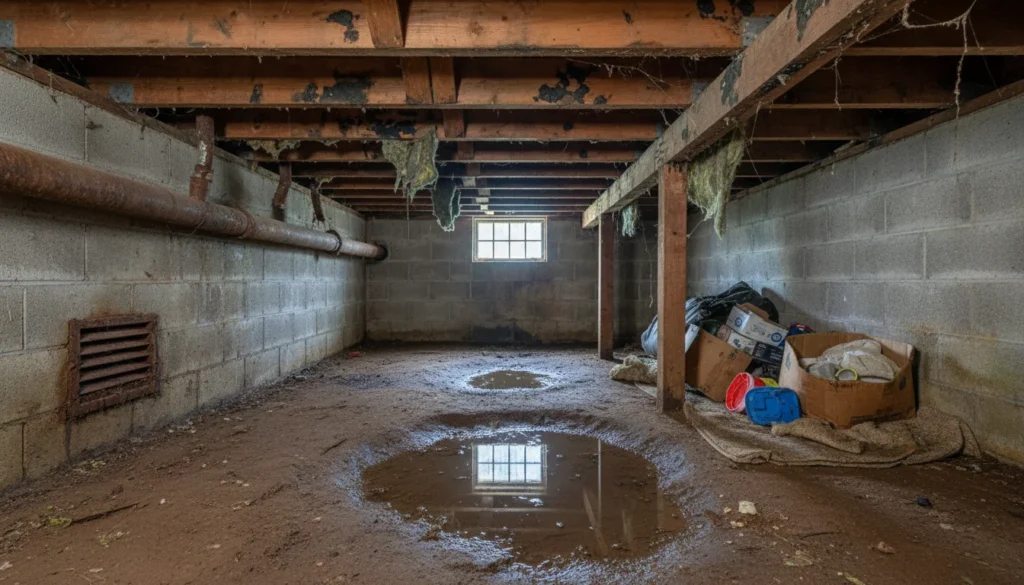
1. Visible Standing Water or Puddles
The most obvious sign of crawl space water damage is standing water. After heavy rainfall or snowmelt, water can pool beneath your home if your drainage system is inadequate or your vapor barrier is damaged or missing entirely. Even a small amount of standing water removal should be treated as an urgent priority because stagnant water accelerates wood rot and creates an ideal breeding ground for bacteria and insects.
If you shine a flashlight into your crawl space and see any pooling, wet soil, or reflective surfaces, contact a water damage professional immediately. Do not enter a flooded crawl space without proper safety equipment.
2. Musty or Damp Odors Inside Your Home
One of the earliest and most reliable signs of crawl space moisture problems is a persistent musty smell inside your home — especially on the ground floor. This odor is typically caused by mold and mildew colonies that have begun growing on damp wood, insulation, or soil beneath your floors.
Because air naturally moves upward through a home (a process called the stack effect), whatever is in your crawl space eventually makes its way into your living areas. If your home smells like a basement even when everything appears dry upstairs, the source is very likely your crawl space.
3. Mold or Mildew Growth
Mold thrives in dark, damp environments with limited airflow — which perfectly describes most crawl spaces. If you inspect your crawl space and notice black, green, or white fuzzy growth on wooden beams, insulation, or the ground cover, you are looking at an active mold problem driven by excess moisture.
Mold in a crawl space is not just a structural issue. It is a health hazard. Mold spores can trigger respiratory problems, allergies, and other health issues for your family. Prompt water damage cleanup is essential to stop mold from spreading further into your home’s structure and air supply.
4. Efflorescence on Foundation Walls
Efflorescence is the white, chalky residue that appears on concrete or masonry surfaces when water moves through them and deposits mineral salts on the surface. If you notice this white powdery substance on your crawl space foundation walls, it is a clear indicator that water is actively seeping through the concrete.
While efflorescence itself is not dangerous, it is a strong warning sign that your foundation is being regularly exposed to moisture — which can eventually lead to cracks, spalling, and serious structural damage if left unaddressed.
5. Wood Rot and Soft Floor Joists
Healthy wooden floor joists and support beams should feel firm and solid. If moisture has been present in your crawl space for an extended period, the wood begins to absorb water and soften. Over time, this leads to wood rot — a condition where the structural integrity of the wood is compromised.
Signs of wood rot in your crawl space include:
- Soft or spongy spots when you press on the wood with a screwdriver or your finger
- Discoloration — wood that appears darker than normal or has a grayish tint
- Crumbling or flaking wood fibers that fall apart when touched
- A hollow sound when you tap on the beam
Advanced wood rot can cause floors above the crawl space to feel bouncy, uneven, or even unsafe to walk on. If you notice these symptoms, a professional inspection is critical.
6. Sagging or Uneven Floors
Speaking of floors — if you notice that your ground-floor surfaces are no longer level, dipping in certain spots, or creaking more than usual, crawl space water damage may be the culprit. As floor joists absorb moisture and begin to rot or warp, they lose their ability to properly support the weight of the floor above them.
Homeowners in communities like Fox Run often report noticing soft spots near exterior walls or in rooms directly above the crawl space perimeter — areas most exposed to ground moisture intrusion.
7. Increased Humidity Inside Your Home
If your home feels unusually humid during warm months even with air conditioning running, or if you notice condensation forming on windows and walls, your crawl space could be releasing moisture vapor into your living space. A crawl space without a proper vapor barrier allows ground moisture to evaporate freely upward.
High indoor humidity not only makes your home uncomfortable but also puts additional strain on your HVAC system and encourages mold growth throughout the house — not just in the crawl space.
8. Pest Infestations
Moisture attracts pests. Termites, carpenter ants, rodents, and other insects are drawn to damp wood and standing water. If you have noticed an uptick in pest activity in or around your home, your crawl space may be providing the ideal wet environment they need to thrive.
Termites in particular are extremely destructive and are often discovered only after they have caused significant damage to wooden structural elements. A wet crawl space dramatically increases your risk of a termite infestation.
9. Rust on Metal Components
Take a look at any metal components in your crawl space — support posts, fasteners, HVAC components, or ductwork. If you see rust or corrosion forming on these surfaces, it is a reliable indicator that moisture levels in the space have been chronically elevated. Metal corrodes when exposed to persistent humidity and water contact, and this corrosion can compromise the integrity of critical structural connections.
10. Condensation on Pipes and Ductwork
When warm, humid air contacts cooler surfaces like water pipes or air conditioning ducts, condensation forms. If you notice water droplets or wet surfaces on pipes and ducts in your crawl space, the humidity levels below your home are dangerously high. This condensation can drip onto the ground and wooden surfaces, creating a cycle of ongoing moisture damage even without any direct water intrusion.
What to Do When You Spot These Signs
If you have identified one or more of these warning signs in your Noblesville home, the most important step is to act quickly. Water damage in a crawl space is progressive — the longer it goes unaddressed, the more expensive and complex the repair process becomes.
Homeowners in areas like Arcadia and surrounding communities should have their crawl spaces inspected at least once a year and after any significant weather event. A professional assessment will identify the source of moisture intrusion, evaluate the extent of any existing damage, and recommend the appropriate remediation steps.
Steps a Professional Will Typically Take
- Inspect and document all areas of moisture damage and mold growth
- Remove standing water using industrial pumps and extraction equipment
- Dry the space thoroughly with commercial dehumidifiers and air movers
- Treat mold with appropriate antimicrobial solutions
- Repair or replace damaged wood, insulation, and vapor barriers
- Recommend drainage solutions such as sump pumps or French drains to prevent recurrence
Prevention Tips for Noblesville Homeowners
While professional remediation is essential when damage has already occurred, there are proactive steps you can take to reduce the risk of crawl space water damage:
- Ensure gutters and downspouts direct water at least six feet away from your foundation
- Grade your yard so that the ground slopes away from your home on all sides
- Install or maintain a high-quality vapor barrier on the crawl space floor
- Consider encapsulating your crawl space for maximum moisture protection
- Install a sump pump if your crawl space is prone to water accumulation
- Schedule annual inspections with a qualified water damage restoration professional
The Cost of Ignoring Crawl Space Water Damage
Many homeowners hesitate to investigate their crawl space because they fear what they might find. However, ignoring the problem is always more costly than addressing it early. Minor moisture issues that could be resolved with a vapor barrier and improved drainage can escalate into full structural repairs, complete mold remediation, and even foundation work if left unattended for too long.
Beyond financial costs, living above a water-damaged crawl space exposes your family to mold spores, allergens, and reduced indoor air quality every single day. Your home’s crawl space is the foundation of your indoor environment — keeping it dry and healthy protects everything above it.
Leave a Reply