What Is the Difference Between Water Damage and Flood Damage?
If you live in Noblesville and have ever dealt with a soaked basement or a burst pipe, you may have used the terms water damage and flood damage interchangeably. However, these two types of damage are distinctly different — not just in their causes but in how they are covered by insurance and how they are treated during the restoration process. Understanding the difference could save you thousands of dollars and prevent costly misunderstandings with your insurance provider.
Defining Water Damage
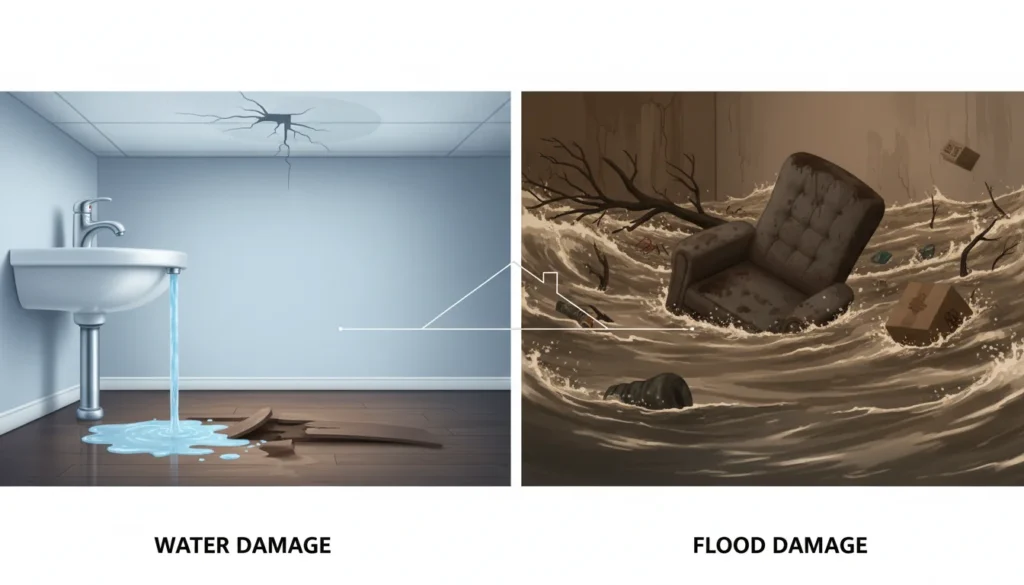
Water damage refers to destruction caused by water that originates from inside your home or property. This type of damage typically results from sudden and accidental incidents such as:
- Burst or leaking pipes
- Overflowing bathtubs or sinks
- Malfunctioning washing machines or dishwashers
- Leaking water heaters
- HVAC system condensation issues
- Roof leaks that allow rainwater inside
The key characteristic of water damage is that the water source is internal and the event is generally sudden and unintentional. For example, a refrigerator leak restoration scenario — where a fridge’s ice maker line bursts and soaks your kitchen floor — is a classic case of water damage rather than flood damage.
Standard homeowner’s insurance policies in Indiana typically cover water damage as long as the cause was sudden and accidental. Gradual damage caused by neglect or lack of maintenance is usually excluded, which is why prompt action matters so much.
Defining Flood Damage
Flood damage is a very different category. According to the Federal Emergency Management Agency (FEMA) and most insurance carriers, a flood is defined as a general and temporary condition of partial or complete inundation of two or more acres of normally dry land — or of two or more properties — from an overflow of inland or tidal waters, unusual and rapid accumulation of surface waters, mudflows, or collapse of land along the shore.
In simpler terms, flood damage comes from external water sources entering your property. Common causes in the Noblesville area include:
- Heavy rainfall causing surface water runoff
- Overflowing rivers or creeks
- Storm surges
- Flash flooding from severe weather events
- Ground saturation that pushes water into basements
Flood damage is not covered by standard homeowner’s insurance policies. To be protected, Noblesville homeowners must purchase a separate flood insurance policy — typically through the National Flood Insurance Program (NFIP) or a private insurer. This is a critical distinction that many homeowners only discover after it is too late.
Why the Distinction Matters for Insurance Claims
The difference between water damage and flood damage has enormous financial implications. When you file a claim, your insurance adjuster will investigate the source of the water. If the water entered your home from the outside due to a weather event, your standard homeowner’s policy will likely deny the claim — even if your basement is completely underwater.
Here is a quick comparison to help clarify:
| Feature | Water Damage | Flood Damage |
|---|---|---|
| Source of Water | Internal (pipes, appliances) | External (rain, rivers, runoff) |
| Covered by Homeowner’s Insurance? | Usually Yes (if sudden) | No — requires separate flood policy |
| Common Causes | Burst pipes, appliance leaks | Heavy rain, overflowing waterways |
| FEMA Involvement | Rarely | Often in declared disaster areas |
| Restoration Complexity | Moderate | Often more extensive |
Noblesville homeowners should review their policies annually and speak with their insurance agent about whether they need supplemental flood coverage — especially if they live near White River or any of the area’s lower-lying neighborhoods.
How Water Damage Restoration Differs from Flood Damage Restoration
Beyond insurance, the restoration process itself varies significantly between these two types of damage. Understanding what each involves can help you set realistic expectations and work more effectively with your restoration team.
Water Damage Restoration
When water damage occurs from an internal source, the restoration process typically involves:
- Identifying and stopping the source — shutting off water supply or repairing the damaged appliance or pipe
- Water extraction — removing standing water using industrial pumps and vacuums
- Drying and dehumidification — using air movers and dehumidifiers to dry structural materials
- Mold prevention — applying antimicrobial treatments to prevent mold growth
- Structural repairs — replacing damaged drywall, flooring, and insulation
Professional water damage cleanup services are essential to ensure that all moisture is fully removed and that no hidden pockets of dampness remain behind walls or under flooring — areas that can become breeding grounds for mold within 24 to 48 hours.
Flood Damage Restoration
Flood damage restoration is often more complex because floodwater is typically contaminated. When rivers overflow or storm drains back up, the water that enters your home may contain sewage, chemicals, debris, and harmful pathogens. This classifies it as Category 3 water — also known as blackwater — which requires specialized handling.
Flood restoration typically involves:
- Extensive water extraction and pumping
- Disposal of contaminated materials including carpeting, drywall, and insulation
- Thorough disinfection and sanitization of all affected surfaces
- Structural drying over multiple days
- Air quality testing and mold remediation if needed
- Full structural rebuild in severe cases
If your basement has taken on floodwater, professional basement flood damage repair is not a DIY project. The health risks and structural implications are too significant to handle without certified professionals equipped with the right tools and training.
Basement Water Damage: A Common Gray Area
Basements in Noblesville are particularly vulnerable to both types of water intrusion. A basement can suffer water damage from a burst pipe or water heater failure — or it can suffer flood damage when groundwater seeps in through foundation cracks during heavy rain. Sometimes it is a combination of both.
This gray area is where disputes with insurance companies often arise. For instance, if your sump pump fails during a storm and your basement floods, some insurers may classify this as flood damage (external water) while others may cover it under a sump pump failure rider on your homeowner’s policy.
Prompt professional basement water extraction is critical regardless of the cause. The longer water sits in your basement, the more damage it causes to your foundation, framing, HVAC systems, and personal belongings — and the higher your risk of mold contamination.
Local Considerations for Noblesville Homeowners
Noblesville and the surrounding Hamilton County area experience a range of weather conditions that can increase the risk of both water and flood damage. Spring thaws, summer thunderstorms, and rapid snowmelt can all contribute to flooding in low-lying areas. Meanwhile, aging plumbing infrastructure in older neighborhoods increases the risk of pipe failures and internal water damage year-round.
Residents in nearby communities such as Tipton face similar challenges, particularly during periods of prolonged rainfall when saturated ground can no longer absorb moisture and water begins to push into basements and crawl spaces.
Here are some proactive steps Noblesville homeowners can take to reduce their risk:
- Install a sump pump with a battery backup system in your basement
- Maintain your gutters and downspouts to direct water away from your foundation
- Inspect your roof annually for missing shingles or damaged flashing
- Know where your main water shutoff valve is located so you can act quickly in an emergency
- Review your insurance policy and ask about flood coverage if you do not already have it
- Schedule regular plumbing inspections to catch small leaks before they become big problems
When to Call a Professional
Whether you are dealing with water damage or flood damage, the answer to when you should call a professional is simple: immediately. Water damage of any kind worsens rapidly. Within the first 24 hours, mold can begin to grow. Within 48 to 72 hours, structural materials begin to swell, warp, and deteriorate. The faster you act, the more of your home — and your belongings — can be saved.
Water Damage Restoration Noblesville Pros is available around the clock to respond to both water damage and flood damage emergencies throughout Noblesville and Hamilton County. Our certified technicians use advanced moisture detection equipment, industrial-grade drying systems, and proven restoration protocols to get your home back to its pre-loss condition as quickly as possible.
If you are unsure whether your situation qualifies as water damage or flood damage, do not worry — our team will assess the source and severity of the damage and help you understand your options. We also assist homeowners in documenting damage for insurance claims, making the process as smooth as possible during a stressful time.
Call us today at (866) 725-0333 for immediate assistance or to schedule a free assessment.
Leave a Reply