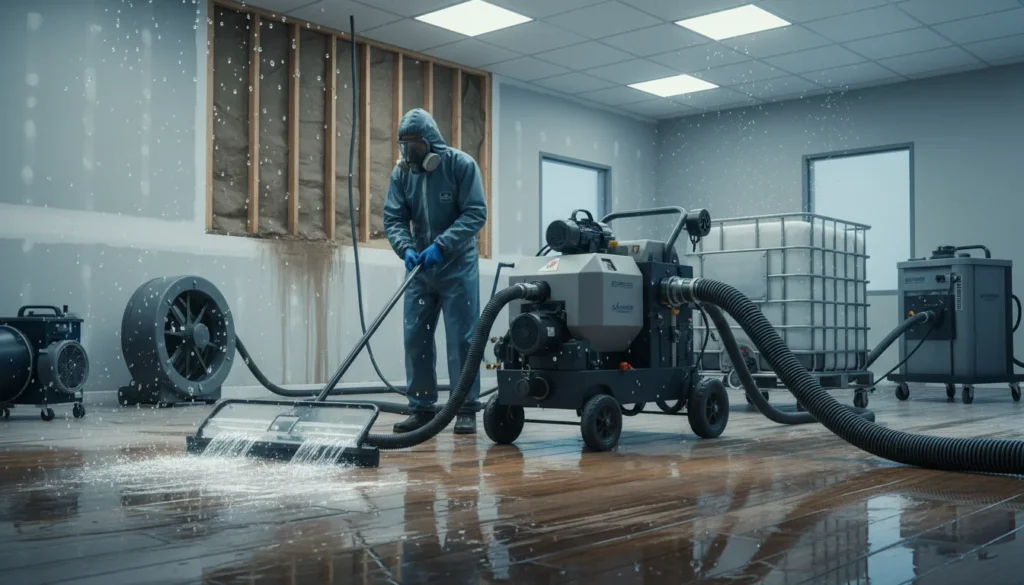
What Water Extraction Means in the Restoration Process
Water extraction in restoration refers to the rapid, professional removal of standing or absorbed water from a property following a flood, pipe burst, appliance leak, or any other water intrusion event. For homeowners and business owners in Noblesville, Indiana, understanding this process is critical — because the faster water is extracted, the less structural damage, mold growth, and financial loss you will face. Water extraction is not simply mopping up puddles; it is a systematic, equipment-driven procedure that forms the foundation of every successful water damage cleanup project.
Why Water Extraction Is the Most Critical First Step
When water invades a structure, it does not stay on the surface. Within minutes, water begins seeping into drywall, insulation, subfloors, wood framing, and concrete. Within 24 to 48 hours, mold can begin to colonize damp materials. The longer water sits, the deeper it penetrates and the more expensive the remediation becomes.
Water extraction addresses this urgency head-on. By physically removing the bulk of the water as quickly as possible, restoration professionals dramatically reduce the drying time required and minimize secondary damage. In Noblesville — where seasonal storms, snowmelt, and aging infrastructure contribute to frequent water damage events — rapid extraction is the difference between a manageable restoration and a complete structural overhaul.
The Science Behind Water Movement in Buildings
Water follows the path of least resistance. It travels downward through gravity but also moves laterally through capillary action — meaning porous materials like wood, drywall, and carpet padding actually draw water inward. This is why a flooded basement can result in wet walls several feet above the waterline, or why a refrigerator leak on the first floor can damage the ceiling of a lower level. Professional extractors understand this behavior and target not just visible water but absorbed moisture throughout the affected zone. For situations involving contaminated water, such as sewage events, this becomes even more urgent — as described in our guide on basement sewage backup cleanup.
Equipment Used in Professional Water Extraction
One of the most important distinctions between professional water extraction and DIY attempts is the equipment. Consumer-grade wet vacuums and mops simply cannot match the power, efficiency, or thoroughness of industrial restoration equipment. Here is a breakdown of what professionals use:
- Truck-Mounted Extraction Units: These are the most powerful extraction systems available. Connected to a restoration vehicle, they generate enormous suction capable of pulling water from deep within carpet, padding, and subfloor materials in a fraction of the time a portable unit would require.
- Portable Extraction Units: Used in areas where truck-mounted systems cannot reach — upper floors, tight spaces, or areas far from access points. Modern portable extractors are still far more powerful than any consumer product.
- Self-Propelled Extractors: Designed for large open areas such as commercial spaces or finished basements, these units allow technicians to cover more ground efficiently.
- Weighted Extraction Tools: Specially designed wand attachments that apply downward pressure to carpet and padding, forcing water up and into the extraction hose rather than simply skimming the surface.
- Submersible Pumps: For standing water deeper than one or two inches — such as flooded basements — submersible pumps are deployed first to remove the bulk volume before extraction equipment takes over for residual moisture.
The Step-by-Step Water Extraction Process
Professional water extraction follows a defined sequence to ensure thoroughness and safety. Here is what the process typically looks like when a team from Water Damage Restoration Noblesville Pros arrives at your property:
Step 1: Safety Assessment and Inspection
Before any equipment is deployed, technicians assess the property for safety hazards. This includes checking for electrical risks, structural instability, and contamination levels. Water is categorized by its source — clean water from a supply line, gray water from appliances or sinks, or black water from sewage or flooding — and the extraction approach is adjusted accordingly.
Step 2: Moisture Mapping and Detection
Using advanced tools such as thermal imaging cameras and moisture meters, technicians map the full extent of water migration throughout the structure. This step is essential because water often travels far beyond the visible damage area. Accurate moisture mapping ensures no wet zones are missed during extraction and drying. Our moisture detection services use the latest technology to identify hidden water pockets behind walls, under flooring, and within ceiling cavities.
Step 3: Bulk Water Removal
If standing water is present, submersible pumps are used to remove the largest volume of water first. This phase can remove hundreds or even thousands of gallons of water, depending on the severity of the event. In Noblesville basements — which are particularly vulnerable to groundwater intrusion during heavy rain events — this step is often the most time-intensive.
Step 4: Deep Extraction from Surfaces and Materials
Once standing water is gone, truck-mounted or portable extractors are used to pull water from carpet, padding, hardwood floors, tile grout, and other surfaces. Weighted extraction tools are applied to carpeted areas to maximize water removal from the padding beneath. This phase is where professional equipment truly outperforms any DIY approach.
Step 5: Targeted Extraction of Hard-to-Reach Areas
Wall cavities, under cabinets, inside closets, and beneath fixed furniture all require specialized attention. Technicians use flexible hose attachments and injection extraction tools to reach these areas without unnecessary demolition.
Step 6: Documentation and Transition to Drying
After extraction is complete, moisture readings are taken again and documented. This data establishes a baseline for the drying phase and provides documentation for insurance claims. Industrial air movers and dehumidifiers are then positioned to begin the structural drying process.
Water Extraction vs. Drying: Understanding the Difference
Many people use the terms water extraction and drying interchangeably, but they are distinct phases of the restoration process. Extraction physically removes liquid water from a structure. Drying removes the remaining moisture vapor that has been absorbed into building materials. Both phases are essential, but extraction must come first — attempting to dry a structure that still contains standing or pooled water is ineffective and wasteful.
Think of it this way: extraction removes 90 to 95 percent of the water present. Drying equipment then handles the remaining moisture that has bonded with porous materials. Skipping or rushing extraction means drying equipment has to work significantly harder and longer — driving up costs and extending the restoration timeline.
Common Causes of Water Damage That Require Extraction in Noblesville
Noblesville residents face a variety of water damage scenarios throughout the year. Understanding the most common causes can help you respond quickly and minimize damage:
- Burst or leaking pipes: Indiana winters bring freezing temperatures that can cause pipes to burst, releasing large volumes of water in a short time.
- Appliance failures: Washing machines, dishwashers, and water heaters are frequent culprits. Even a slow leak from a refrigerator water line can cause significant hidden damage over time — a situation covered in detail in our resource on refrigerator leak restoration.
- Storm and flood damage: Heavy rainfall and flash flooding can overwhelm drainage systems and allow water to enter basements and crawl spaces.
- Sewage backups: Aging sewer lines and heavy rain events can cause sewage to back up into lower levels of a home.
- Roof leaks: Damaged or aging roofing allows water to enter attic spaces and migrate down into living areas.
Local Considerations for Noblesville Properties
Noblesville is a growing community in Hamilton County with a mix of newer construction and older homes. Older properties may have clay sewer lines prone to root intrusion and collapse, increasing the risk of sewage backups. Newer developments sometimes face grading issues that direct surface water toward foundations. The White River and Morse Reservoir area also creates localized flooding risks during heavy precipitation events.
Residents in surrounding communities also benefit from professional extraction services. For example, homeowners in Arcadia and other nearby areas can rely on the same expert response team for fast, thorough water extraction when disaster strikes.
How to Respond Before Professionals Arrive
While waiting for a restoration team to arrive, there are safe steps you can take to reduce damage:
- Turn off the water supply at the main shutoff if the source is a broken pipe or appliance.
- Turn off electricity to affected areas if it is safe to do so — never wade through standing water if electrical outlets or panels may be submerged.
- Remove small, portable valuables and documents from the water-affected area.
- Do not use standard household fans or vacuums on contaminated water.
- Document the damage with photos and video for your insurance claim.
- Avoid walking through heavily saturated carpet more than necessary — foot traffic pushes water deeper into padding and subfloor materials.
Why Professional Extraction Matters for Insurance Claims
Insurance companies expect a documented, professional response to water damage. When you hire a certified restoration company, you receive detailed moisture logs, extraction records, and drying reports that support your claim and demonstrate due diligence. Attempting DIY extraction and then filing a claim for residual damage can raise red flags with adjusters and potentially reduce your settlement. Professional documentation also protects you if disputes arise about the extent of the original damage versus damage caused by delayed or inadequate response.
Choosing the Right Water Extraction Team in Noblesville
Not all restoration companies are equal. When evaluating a water extraction provider in Noblesville, look for the following:
- IICRC certification (Institute of Inspection Cleaning and Restoration Certification)
- 24/7 emergency availability — water damage does not wait for business hours
- Truck-mounted extraction capability for maximum power and efficiency
- Thermal imaging and moisture detection technology
- Clear communication and documentation practices for insurance support
- Local experience and knowledge of Noblesville-specific risks and building types
Water Damage Restoration Noblesville Pros meets all of these criteria and is available around the clock to respond to water emergencies throughout the Noblesville area. Call us at (866) 725-0333 for immediate assistance.
Leave a Reply