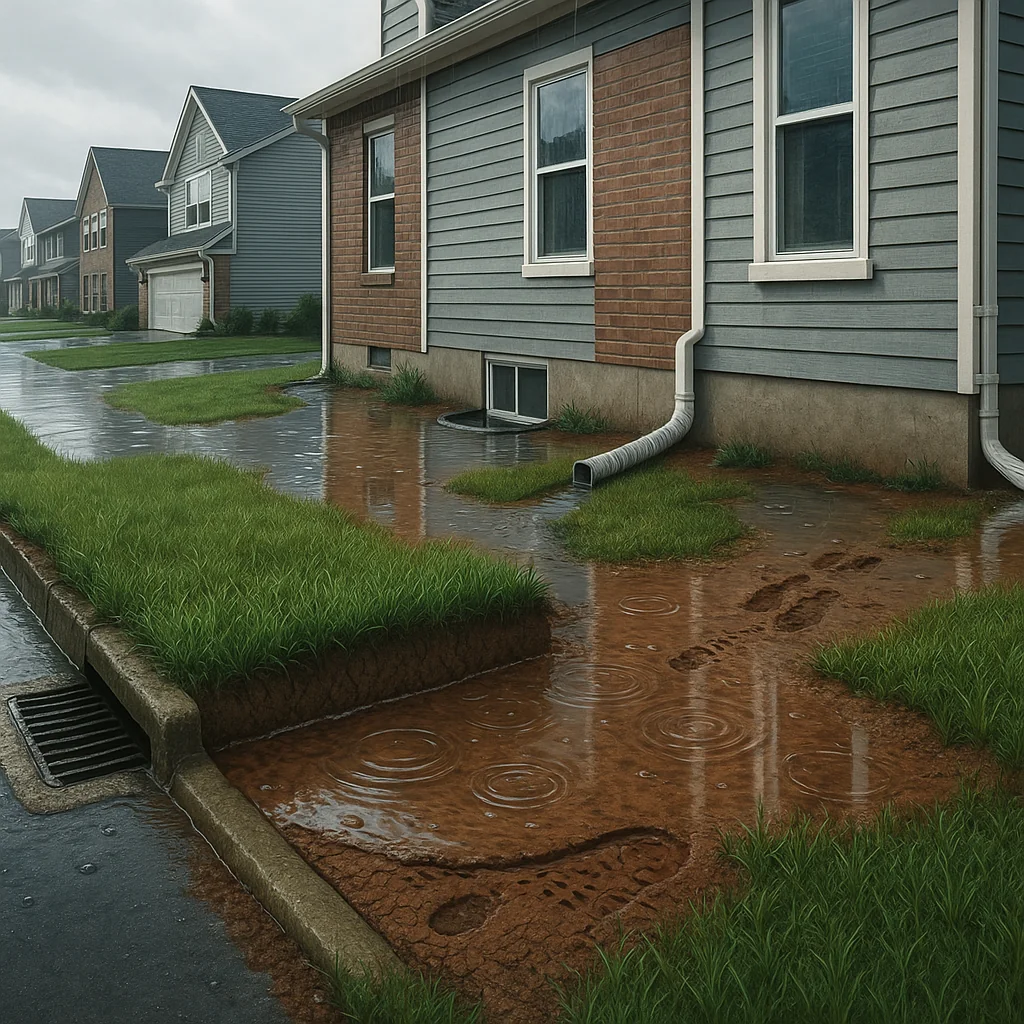
How Clay Soil Creates Serious Flood Conditions in Noblesville
Clay soil is one of the most significant — and often overlooked — contributors to flooding and water damage in Noblesville, Indiana. Unlike sandy or loamy soils that allow rainwater to drain freely, clay soil absorbs water slowly and retains it for extended periods. When heavy rainfall hits Noblesville, the dense clay-heavy ground quickly becomes saturated, forcing water to pool on the surface, flow toward foundations, and seep into basements. Understanding this geological reality is essential for every Noblesville homeowner who wants to protect their property from costly water damage.
The Science Behind Clay Soil and Poor Drainage
To understand why clay soil amplifies flood risk, it helps to understand its physical properties. Clay particles are extremely fine — much smaller than sand or silt — and they pack together tightly, leaving very little space for water to move through. This characteristic is described as low permeability, meaning water cannot easily pass through the soil profile.
When rain falls on clay-heavy ground, the top layer absorbs moisture relatively quickly at first. But once that thin surface layer becomes saturated — which can happen within minutes during a moderate to heavy rainstorm — the water has nowhere to go. It begins to run off laterally across the surface, pooling in low-lying areas, driveways, yards, and most dangerously, against the foundations of homes.
Central Indiana, including Noblesville and surrounding communities, sits on a glacial till landscape deposited thousands of years ago. This glacial activity left behind thick layers of clay-rich soil across Hamilton County. The result is a region where natural drainage is already challenged — and where urban development has made the problem even more acute by replacing permeable green spaces with impervious surfaces like roads, parking lots, and rooftops.
Why Noblesville Properties Are Especially Vulnerable
Noblesville has experienced significant residential and commercial growth over the past two decades. As new subdivisions have been built and older neighborhoods have been expanded, the natural landscape has been altered in ways that interact poorly with the existing clay soil. Here are several reasons why Noblesville properties face heightened flood risk:
- Grading and Landscaping Issues: Improper grading during construction can cause yards to slope toward homes rather than away from them. When clay soil prevents water from soaking in, this misdirected runoff concentrates directly against foundations.
- Aging Infrastructure: Older neighborhoods in Noblesville may have stormwater systems that were not designed to handle today’s rainfall volumes or the increased runoff caused by development upstream.
- Shallow Water Tables: Clay soil slows the downward movement of water through the ground. This can raise the local water table during wet seasons, putting additional hydrostatic pressure on basement walls and floors.
- Freeze-Thaw Cycles: Indiana winters cause clay soil to expand when frozen and contract when thawed. This repeated movement can crack foundation walls and create pathways for water intrusion that worsen over time.
- Storm Drain Overload: During intense rainfall events, municipal storm drains can become overwhelmed. Combined with poor soil absorption, this leads to flash flooding in streets and yards throughout Noblesville neighborhoods.
The Connection Between Clay Soil and Basement Flooding
Basement flooding is one of the most direct consequences of clay soil in Noblesville. Because clay retains water at or near the surface for hours or even days after a rain event, that standing water exerts constant pressure against basement walls and floors. This phenomenon — known as hydrostatic pressure — is responsible for a significant percentage of basement water intrusion cases in the region.
Even homes that were built with waterproofing systems can succumb to hydrostatic pressure over time. Cracks develop in poured concrete walls. Block foundation joints weaken. Window wells fill with water and allow moisture to seep around window frames. In severe cases, water can push up through the basement floor slab itself.
Homeowners who experience recurring basement water problems after heavy rains should consider professional basement flood damage repair services that address both the immediate water damage and the underlying drainage vulnerabilities. Patching a crack without improving drainage around the foundation is rarely a permanent solution when clay soil is involved.
In some situations, overwhelmed drainage systems can also force sewage back into basements through floor drains and toilets. This is a serious health hazard and requires immediate attention. Professional basement sewage backup cleanup is critical in these situations to remove contaminated water safely and sanitize affected areas before mold and bacteria can take hold.
Seasonal Patterns That Worsen the Problem
Noblesville experiences a climate pattern that creates multiple high-risk windows throughout the year for clay-soil-related flooding. Spring is traditionally the most dangerous season, as snowmelt combines with heavy April and May rains to saturate already-wet soil. But summer thunderstorms can be equally damaging — intense rainfall events that dump an inch or more of rain in under an hour can overwhelm clay soil’s limited absorption capacity almost instantly.
Fall can also bring prolonged wet periods that keep soil saturated for weeks at a time. And as mentioned earlier, the freeze-thaw cycle of winter gradually degrades foundation integrity in ways that become apparent the following spring.
Homeowners in Noblesville and nearby communities like Arcadia should be especially vigilant during these seasonal transitions. Having a plan in place before heavy rains arrive — including knowing who to call for emergency water damage response — can significantly reduce the long-term cost and disruption of flood damage.
Professional seasonal flood damage cleanup services are designed to respond quickly during these high-risk periods, providing rapid extraction, drying, and restoration before secondary damage like mold growth has a chance to develop.
Warning Signs That Clay Soil Is Affecting Your Property
Many homeowners don’t realize that clay soil is contributing to their water problems until significant damage has already occurred. Here are some early warning signs to watch for:
- Water pooling in the yard for more than 24 hours after rainfall
- Damp or musty smells in the basement after rain events
- Efflorescence (white mineral deposits) on basement walls — a sign of water moving through the concrete
- Cracks in foundation walls or floor slabs that appear to be growing over time
- Doors and windows that stick or become difficult to open — a possible sign of foundation movement caused by soil pressure
- Gutters and downspouts that discharge water too close to the foundation
- Visible erosion channels in the yard that direct water toward the home
If you notice any of these warning signs, it is worth having a professional assessment done before the next major rain event. Early intervention is almost always less expensive than emergency restoration after a flood has occurred.
Practical Steps Noblesville Homeowners Can Take
While you cannot change the geology of your property, there are meaningful steps you can take to reduce the flood risk posed by clay soil:
Improve Grading Around Your Foundation
The ground around your home should slope away from the foundation at a rate of at least six inches over the first ten feet. If your yard slopes toward your home, regrading is one of the most effective investments you can make in flood prevention.
Install or Upgrade a Sump Pump System
A properly functioning sump pump with a battery backup is essential for Noblesville homes with clay soil. During extended power outages — which often coincide with the same storms that cause flooding — a battery backup ensures your pump continues to operate when you need it most.
Extend Downspouts Away from the Foundation
Gutters and downspouts that discharge water within a few feet of your home’s foundation are essentially directing roof runoff directly into the zone where clay soil retains moisture. Extending downspouts at least six to ten feet from the foundation — or connecting them to underground drainage pipes — can significantly reduce foundation saturation.
Consider French Drains or Dry Wells
For properties with persistent drainage problems, a French drain system installed around the perimeter of the home can intercept water before it reaches the foundation. Dry wells can also provide a collection point that allows water to slowly percolate into deeper soil layers over time.
Add Organic Matter to Garden Beds
While you cannot amend your entire yard, incorporating compost and organic material into garden beds near your foundation can improve drainage in those localized areas and reduce surface runoff.
When Professional Water Damage Restoration Is Necessary
Despite the best preventive efforts, flooding can still occur — especially during extreme weather events that overwhelm even well-prepared properties. When water does enter your home, speed is critical. The longer water sits in contact with building materials, the more extensive the damage becomes. Drywall, insulation, wood framing, and flooring can all sustain serious damage within hours of water exposure. Mold can begin to develop within 24 to 48 hours in warm conditions.
Professional basement water extraction services use industrial-grade pumps and wet vacuums to remove standing water quickly and efficiently. This is followed by commercial drying equipment — including high-capacity air movers and dehumidifiers — that removes moisture from building materials before mold and structural damage can develop.
Water Damage Restoration Noblesville Pros provides rapid-response water damage restoration services throughout Noblesville and Hamilton County. Our team understands the specific challenges posed by clay soil in this region and brings the expertise and equipment necessary to restore your property thoroughly and efficiently. For immediate assistance call (866) 725-0333.
The Long-Term Outlook for Noblesville Homeowners
As Noblesville continues to grow and climate patterns deliver more frequent intense rainfall events, the interaction between clay soil and urban development will remain a significant challenge for homeowners throughout the area. Staying informed about your property’s drainage characteristics, investing in preventive measures, and having a trusted restoration professional on call are the three pillars of effective flood risk management in this environment.
The good news is that clay soil’s challenges are well understood, and there are proven solutions available at every level — from simple landscaping adjustments to comprehensive drainage systems and professional restoration services. By taking the issue seriously now, Noblesville homeowners can protect their properties and their peace of mind for years to come.
Leave a Reply