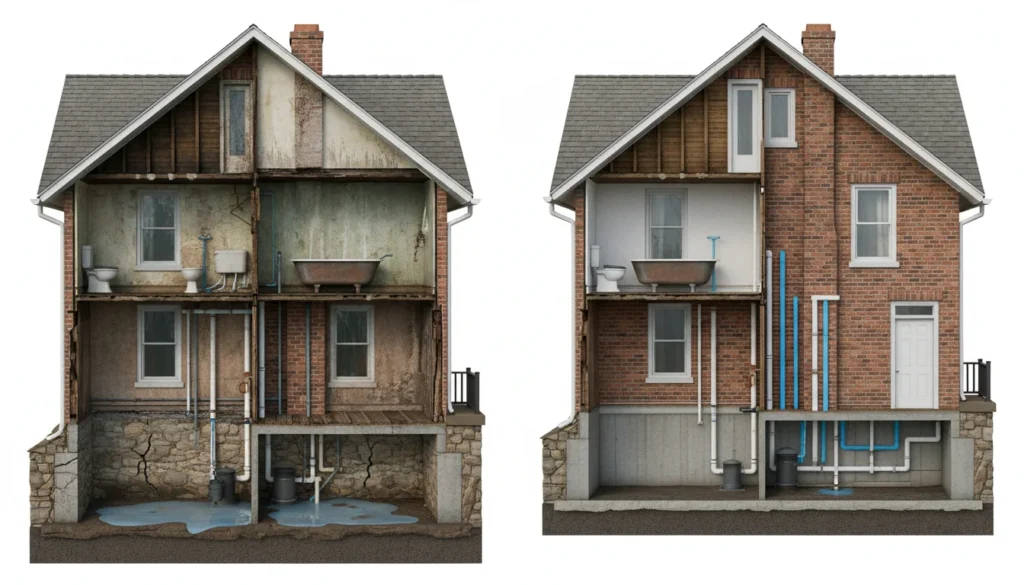
The Hidden Water Damage Risk in Noblesville’s Older Homes
If you own an older home in Noblesville, Indiana, you are statistically more likely to experience water damage than your neighbors in newer construction. This is not a coincidence. Homes built decades ago were constructed with materials, methods, and infrastructure that simply were not designed to last forever — and many of those systems are now failing quietly behind your walls, under your floors, and beneath your foundation. Understanding why older Noblesville homes are more susceptible to water intrusion is the first step toward protecting one of your most valuable investments.
Noblesville’s Rich Housing History and What It Means for Homeowners
Noblesville has a deep-rooted history as one of Indiana’s most charming communities. Many of the homes in the city’s historic districts and established neighborhoods date back to the early 1900s through the 1970s. While these homes carry incredible architectural character and charm, they also carry decades of wear on their plumbing, roofing, drainage systems, and waterproofing materials.
The Hamilton County seat has seen significant population growth in recent years, drawing attention to its older housing stock. Many buyers are purchasing these vintage homes without fully understanding the hidden water damage risks that come with them. Local restoration professionals at Water Damage Restoration Noblesville Pros regularly respond to calls from homeowners who are shocked to discover extensive water damage that has been building for years — sometimes decades.
Aging Plumbing Systems: A Major Culprit
One of the most significant contributors to water damage in older Noblesville homes is outdated plumbing. Homes built before the 1980s commonly used materials that are now known to be problematic:
- Galvanized steel pipes — These pipes were standard for decades but corrode from the inside out over time. As the interior walls of the pipe deteriorate, water flow is restricted and leaks become increasingly likely.
- Polybutylene pipes — Installed widely between the 1970s and 1990s, these pipes react poorly to oxidants in public water supplies and are prone to sudden bursting without warning.
- Lead pipes and fittings — Older homes may still have lead service lines or lead solder on copper joints, which can corrode and develop pinhole leaks over time.
- Cast iron drain lines — While durable, cast iron sewer lines in very old homes can crack, corrode, and collapse, causing sewage backups and significant water damage in basements and crawl spaces.
A single pinhole leak in a wall cavity can release hundreds of gallons of water over weeks before it becomes visible. By the time a homeowner notices a stain on the ceiling or a soft spot in the floor, the structural damage may already be extensive. This is why professional water damage cleanup in older homes often reveals far more damage than initially expected.
Foundation Deterioration and Basement Vulnerabilities
The foundations of older Noblesville homes were built using materials and techniques that are no longer considered adequate by modern standards. Many homes constructed before the 1960s used poured concrete or stone block foundations that were not treated with modern waterproofing membranes. Over time, these foundations develop cracks, gaps, and porous sections that allow groundwater to seep through.
Indiana’s freeze-thaw cycles make this problem significantly worse. Every winter, water that has penetrated small foundation cracks expands as it freezes, widening those cracks further. Over decades, what started as a hairline fracture can become a significant structural opening that allows water to pour into the basement during heavy rain or snowmelt.
Basements in older homes are particularly vulnerable. Many were not designed as livable spaces and lack the drainage infrastructure needed to manage water intrusion. Homeowners who have finished their basements without addressing underlying water issues are especially at risk. Professional basement water damage restoration in these properties often involves not just drying and remediation but also addressing the root cause of water entry to prevent recurrence.
Failed or Absent Sump Pump Systems
Modern homes in Noblesville are almost universally built with sump pump systems designed to manage groundwater and prevent basement flooding. Many older homes either never had a sump pump installed or have aging systems that are well past their useful lifespan.
A sump pump typically lasts between seven and ten years. Homes with original or neglected sump pumps are ticking time bombs during Indiana’s heavy spring rains. When a sump pump fails during a significant rain event, basements can flood rapidly — sometimes within minutes. Sump pump failure water damage is one of the most common emergency calls received by restoration professionals in Noblesville, and older homes account for a disproportionate share of those incidents.
Even homes that have sump pumps may be running systems that are undersized for the water volume they face or that lack battery backup systems. During severe storms when power outages are most likely, a sump pump without battery backup becomes useless at exactly the wrong moment.
Deteriorating Roofing and Gutters
The roof is a home’s first line of defense against water intrusion, and older Noblesville homes frequently have roofing systems that are overdue for replacement. Asphalt shingles have a typical lifespan of 20 to 30 years depending on quality and installation. Many older homes have had multiple roofing layers added over the decades rather than full tear-offs, which can mask underlying decking damage and reduce the effectiveness of the new surface.
Common roofing issues in older homes include:
- Cracked or missing shingles that allow direct water infiltration
- Deteriorated flashing around chimneys, skylights, and vents
- Sagging or rotted roof decking from years of moisture exposure
- Clogged or damaged gutters that direct water toward the foundation rather than away from it
- Improperly sloped or insufficient downspout extensions
When gutters fail to direct water away from the home, it pools near the foundation. In older homes with already compromised foundations, this creates a direct pathway for water to enter basements and crawl spaces. This type of recurring water intrusion often leads to the need for professional basement flood damage repair that could have been prevented with proper gutter maintenance.
Outdated Waterproofing and Insulation
Modern construction incorporates vapor barriers, waterproof membranes, and drainage planes that older homes simply do not have. In homes built before the widespread adoption of these technologies, moisture can move freely through wall assemblies, accumulating in insulation, wood framing, and drywall.
Old fiberglass or cellulose insulation that has been exposed to moisture loses its effectiveness and becomes a breeding ground for mold. In many older Noblesville homes, the insulation in walls and crawl spaces has been wet and dry repeatedly over the years, creating conditions that accelerate structural deterioration and create persistent air quality problems.
Crawl spaces in older homes are particularly problematic. Many were built with dirt floors and no vapor barriers, allowing ground moisture to evaporate directly into the structural components above. This persistent humidity causes wood to rot, metal fasteners to corrode, and mold to thrive — all of which can eventually lead to significant water damage events.
What Noblesville Homeowners Can Do
Owning an older home in Noblesville does not mean water damage is inevitable — but it does mean vigilance is essential. Here are practical steps homeowners can take to reduce their risk:
- Schedule a plumbing inspection — Have a licensed plumber assess the age and condition of your pipes. Proactive repiping is far less costly than emergency water damage restoration.
- Inspect and maintain your sump pump — Test it regularly and install a battery backup system. Replace the pump every seven to ten years.
- Address foundation cracks promptly — Small cracks should be sealed before they expand. Consider interior or exterior waterproofing systems for basements with recurring moisture issues.
- Clean gutters and extend downspouts — Ensure water is directed at least six feet away from your foundation.
- Monitor your water bill — Unexplained increases in water usage can indicate a hidden leak.
- Install water leak detectors — Smart sensors placed near appliances, under sinks, and in the basement can alert you to moisture before it becomes a crisis.
Homeowners in surrounding communities like those served in Tipton face similar challenges with older housing stock and benefit from the same proactive approach to water damage prevention.
When Prevention Is Not Enough: Professional Restoration Matters
Even the most diligent homeowner can face a water damage event. When it happens, the speed and quality of the response makes an enormous difference in the extent of the damage and the cost of repair. Water begins to cause structural damage within hours and can support mold growth within 24 to 48 hours of exposure.
Professional water damage restoration teams bring industrial-grade drying equipment, moisture detection technology, and the expertise to identify all affected areas — including hidden pockets of moisture inside walls and under floors that homeowners cannot detect on their own. Attempting to dry out a water-damaged older home with consumer-grade fans and dehumidifiers almost always results in incomplete drying and long-term problems.
Local Expertise Makes a Difference
Noblesville’s older homes have unique characteristics that require a restoration team familiar with local construction history, soil conditions, and weather patterns. The clay-heavy soils common in Hamilton County expand when wet and contract when dry, placing additional stress on older foundations throughout the year. Local restoration professionals understand these nuances and can provide solutions tailored to the specific challenges Noblesville homeowners face.
Water Damage Restoration Noblesville Pros has extensive experience working in the city’s historic and established neighborhoods. Our team understands the specific vulnerabilities of older construction and approaches every restoration project with the thoroughness these homes demand. If you suspect water damage in your home or want a professional assessment of your risk, contact us at (866) 725-0333.
Leave a Reply